What do heart rate and sleep reveal about our future health?
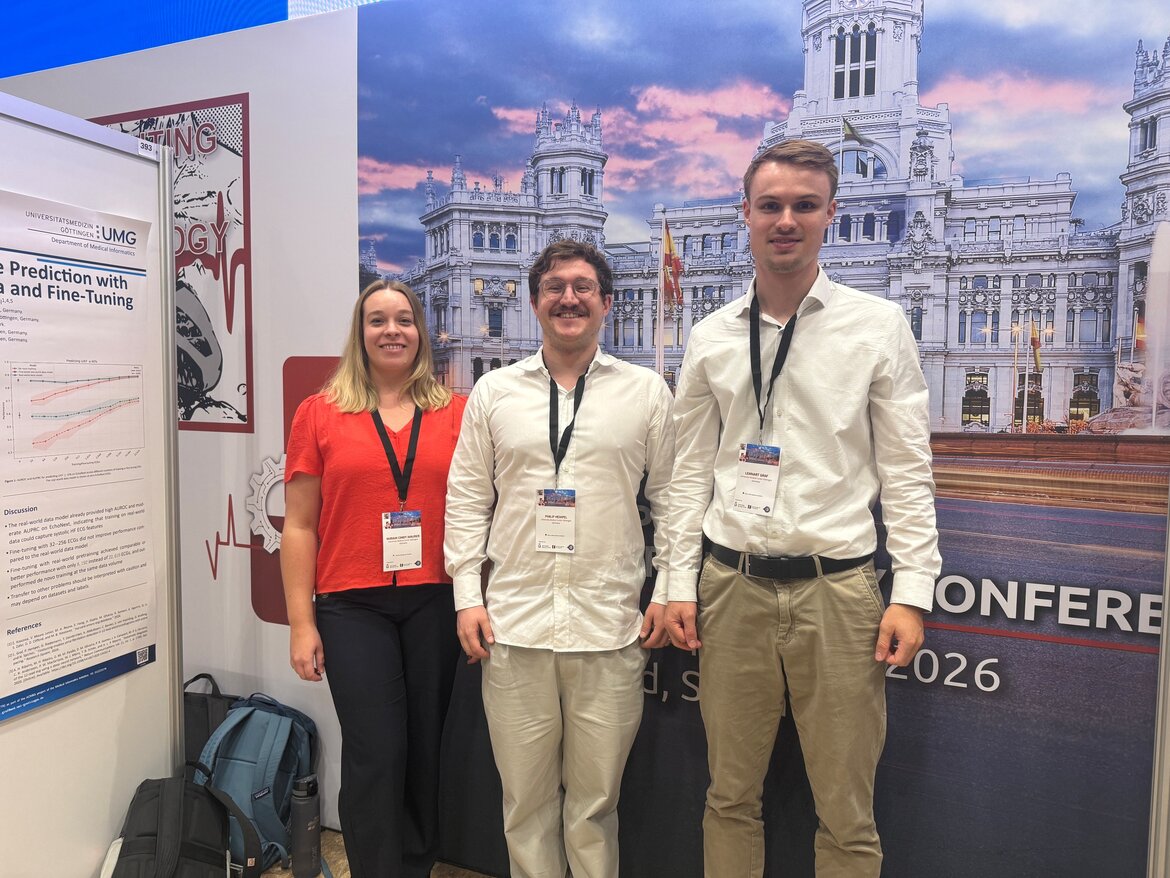
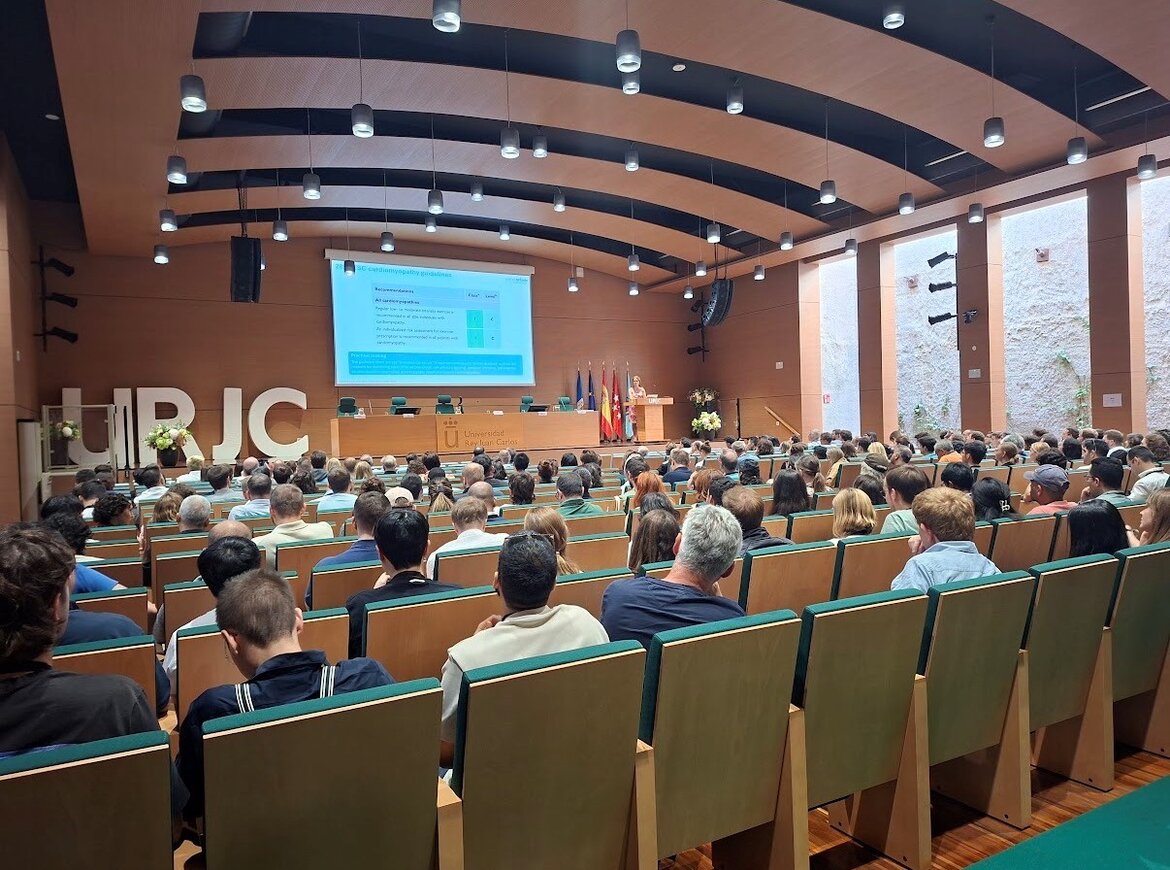
The Department of Medical Informatics is presenting two papers at the 53rd Computing in Cardiology (CinC) conference, taking place in Madrid from September 20 to 23, 2026. Both papers revolve around a simple yet remarkably fruitful question: Do biosignals contain more information than we are currently utilizing?
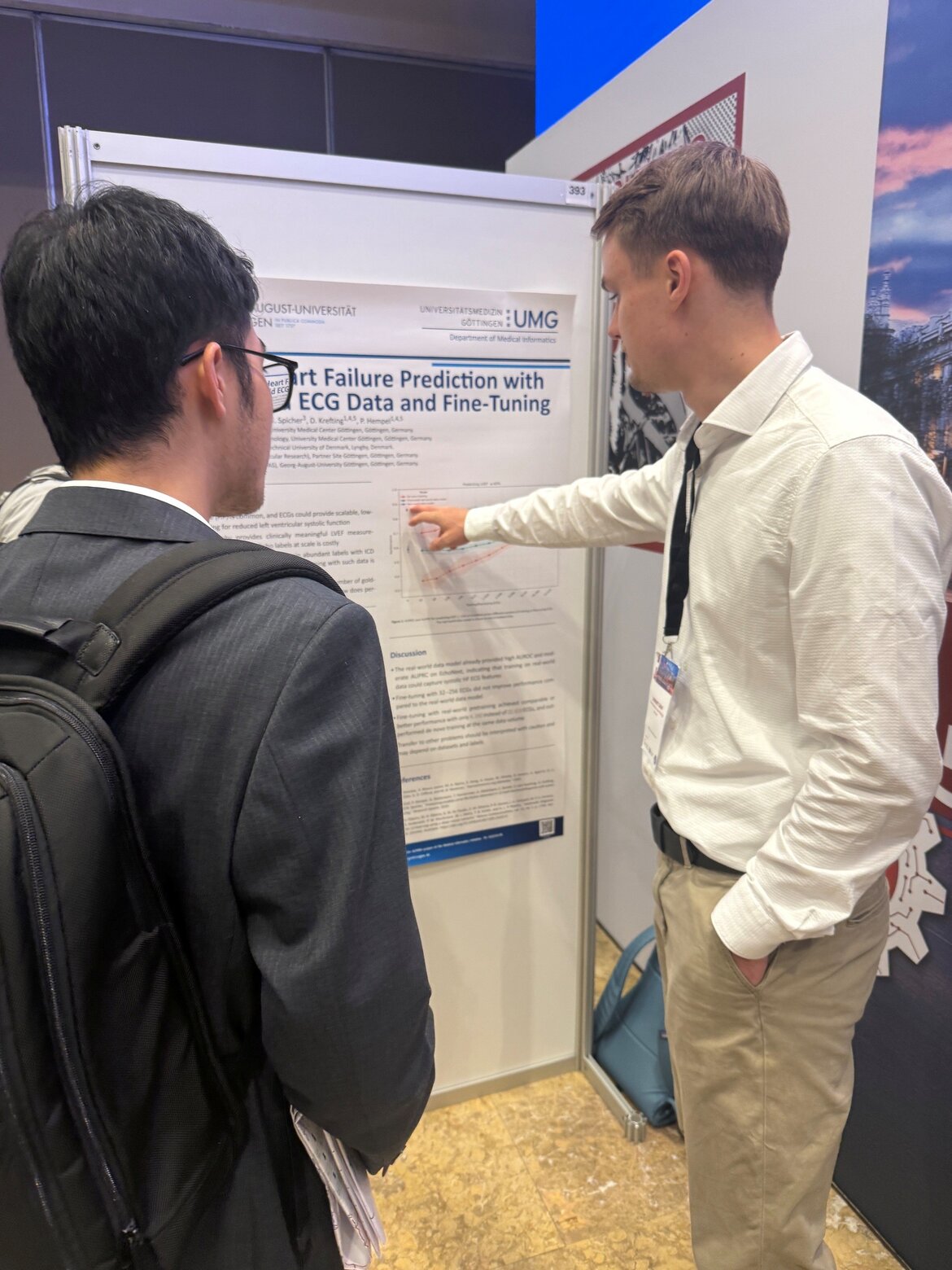
Together with Lennart Graf, Dr. Philip Hempel is presenting a study on detecting impaired heart function using large ECG datasets. The underlying concept is that ECGs are among the most frequently performed medical examinations. If AI can extract additional insights into the heart's pumping function from them, this well-established procedure could eventually evolve into an even more versatile screening tool.
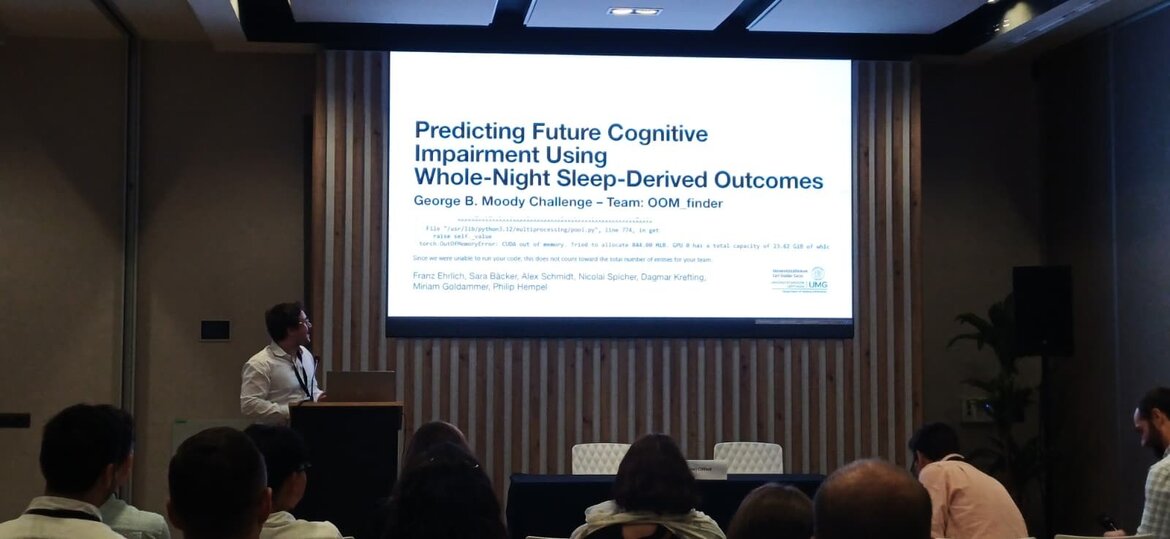
The second contribution shifts the focus from the heart to sleep—and from there to the brain. Dr. Philip Hempel is collaborating with colleagues from Dresden on this year’s George B. Moody PhysioNet Challenge. In 2026, the challenge addresses whether a single night in a sleep laboratory can yield clues regarding future cognitive impairment. To this end, the researchers analyze signals routinely recorded during sleep studies: brain activity, heart rate, respiration, and the progression of various sleep stages.
Why is this exciting? In conditions like Alzheimer’s, physiological changes often begin long before a definitive diagnosis is possible. At the same time, new therapies are emerging that are particularly promising during the early stages of the disease. The earlier at-risk individuals can be identified, the more effectively new treatment approaches can be evaluated and, ultimately, implemented. Instead of waiting until symptoms become obvious, the question becomes: Are there subtle clues hidden in everyday physiological signals years in advance?
This also brings the discussion full circle to the DZHK retreat; while the keynote there focused on neurodegenerative diseases and new therapeutic strategies, the focus at Computing in Cardiology is now on possible early markers. Different perspectives, the same direction: detect earlier, understand better, treat more precisely.
The collaboration with Dresden brings together sleep medicine, biosignal processing, and medical AI. And it is precisely this combination that makes the subject so exciting: perhaps a night’s sleep tells us more than just how well someone slept.
Those interested can find further information on the event website: https://cinc2026.org/